5 Crafting the Perfect Blog Structure: A Guide for Effective Blogging
Introduction
A successful blog is not just about writing great content. The way you organize and present that content is equally important. Many bloggers create valuable articles but struggle to keep readers engaged because their blog structure is confusing or difficult to navigate.
A well-structured blog improves readability, enhances user experience, and helps search engines understand your content better. In this guide, you’ll learn how to create the perfect blog structure that attracts readers, keeps them engaged, and supports long-term blogging success.
Crafting the Perfect Blog Structure for Effective Blogging
Understanding the Importance of Crafting the Perfect Blog Structure
Before creating content, it’s important to understand why blog structure matters. A clear structure helps visitors quickly find the information they need and encourages them to spend more time on your website.
A strong blog structure provides:
- Better user experience
- Improved readability
- Stronger SEO performance
- Higher engagement rates
Without proper organization, even high-quality content can lose its effectiveness.
Common Crafting the Perfect Blog Structure Mistakes
Many bloggers make simple mistakes that reduce the impact of their content:
- Using long blocks of text
- Skipping headings and subheadings
- Poor navigation
- Lack of internal linking
Avoiding these mistakes can significantly improve your blog’s performance.
“A well-structured blog keeps readers engaged and encourages them to explore more content.”
Step 1 – Create a Strong and Clear Title
Why Your Title Matters
The title is the first thing readers see. It should clearly explain what the article is about while encouraging people to click.
A good title should:
- Be specific
- Include the focus keyword
- Spark curiosity
Best Practices for Crafting the Perfect Blog Structure Titles
- Keep titles concise
- Use relevant keywords naturally
- Focus on user intent
Why It Works
Strong titles improve click-through rates and help search engines understand your content.
Step 2 – Organize Content with Headings and Subheadings
The Role of Headings
Headings break content into manageable sections and improve readability.
Using:
- H1 for the main title
- H2 for major sections
- H3 for supporting points
creates a logical flow for readers.
Benefits of Proper Heading Crafting the Perfect Blog Structure
- Easier navigation
- Better user experience
- Improved SEO
Why It Works
Search engines use headings to understand the topic and hierarchy of your content.
Step 3 – Write Short and Engaging Paragraphs
Improving Readability
Large blocks of text can overwhelm readers. Short paragraphs make content easier to scan and understand.
Focus on:
- One idea per paragraph
- Clear and simple language
- Smooth transitions between sections
Best Practices
- Use bullet points when necessary
- Keep sentences concise
- Avoid unnecessary jargon
Why It Works
Readers are more likely to stay on your page when content is easy to read.
Step 4 – Use Internal Links Strategically
What Are Internal Links?
Internal links connect one page of your website to another. They help visitors discover related content and improve site navigation.
Benefits of Internal Linking
- Increases page views
- Reduces bounce rate
- Helps search engines crawl your website
How to Use Them Effectively
Link relevant articles naturally within your content instead of forcing links where they don’t belong.
Step 5 – Add Visual Elements
Importance of Images and Graphics
Visual content makes blog posts more engaging and easier to understand.
Examples include:
- Featured images
- Infographics
- Screenshots
- Charts
Best Practices
- Optimize image sizes
- Add descriptive alt text
- Use relevant visuals
Why It Works
Visual elements improve user engagement and support SEO efforts.
“Good visuals and a clean structure make your blog more appealing and professional.”
SEO Strategies for a Better Crafting the Perfect Blog Structure
Importance of Keyword Placement
A strong blog structure should support SEO by placing keywords naturally throughout the content.
Focus on:
- Title optimization
- Headings and subheadings
- Introduction and conclusion
- Image alt text
Content Organization for SEO
Search engines prefer content that is easy to understand and properly organized.
Use:
- Clear headings
- Short paragraphs
- Internal links
- Relevant keywords
to improve search visibility.
Quick Answer for Featured Snippet
What Is the Crafting the Perfect Blog Structure?
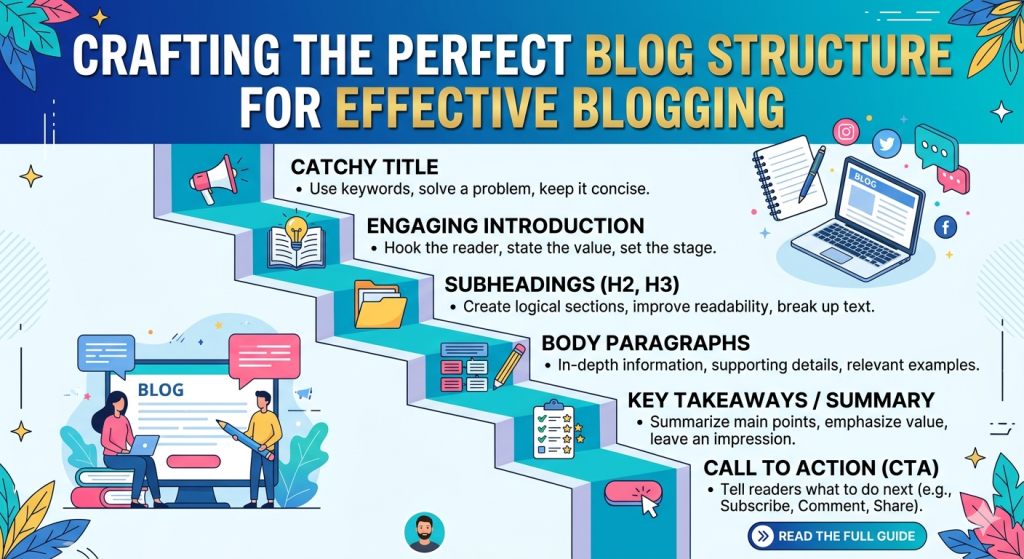
The perfect blog structure includes a clear title, engaging introduction, organized headings, short paragraphs, internal links, visual elements, and SEO optimization. This structure improves readability, user experience, and search engine rankings.
Tips to Improve Your Crafting the Perfect Blog Structure
Focus on User Experience
Always structure content with readers in mind. Make information easy to find and understand.
Keep Navigation Simple
Organize categories and menus clearly so visitors can explore your website effortlessly.
Update Content Regularly
Review and improve older posts to maintain quality and relevance.
FAQ Section
Q1: Why is blog structure important?
A proper blog structure improves readability, user experience, and SEO performance.
Q2: How do headings improve blogging?
Headings organize content, make articles easier to scan, and help search engines understand your content.
Q3: Should every blog post include internal links?
Yes, internal links help readers discover related content and improve website navigation.
Q4: Does blog structure affect SEO?
Yes, a well-structured blog helps search engines understand content and can improve rankings.

| Blog Structure Element | Purpose | SEO Benefit |
|---|---|---|
| Clear Title | Attract readers | Improves CTR |
| Headings | Organize content | Better indexing |
| Short Paragraphs | Improve readability | Better engagement |
| Internal Links | Guide visitors | Stronger site structure |
| Images | Enhance experience | Image SEO benefits |
📚 Useful Resources
- Google SEO Starter Guide – Official guide from Google
- CoSchedule Headline Analyzer – Check your title strength
- Canva – Create free graphics and infographics
Conclusion
Crafting the perfect blog structure is essential for effective blogging. A well-organized blog helps readers find information quickly, improves user experience, and increases the chances of ranking higher in search results.
By using clear titles, logical headings, short paragraphs, internal links, and optimized visuals, you can create content that is both reader-friendly and SEO-friendly. Over time, a strong blog structure will help you build authority, increase engagement, and grow your blogging success.
In conclusion, crafting the perfect blog structure is one of the most important steps toward creating a successful and effective blog.